Tracing the Spread of AI-Driven Personalization Tools Through Interstate US Gaming Compliance Frameworks
Written by Xander Frank · Oct 31, 2026
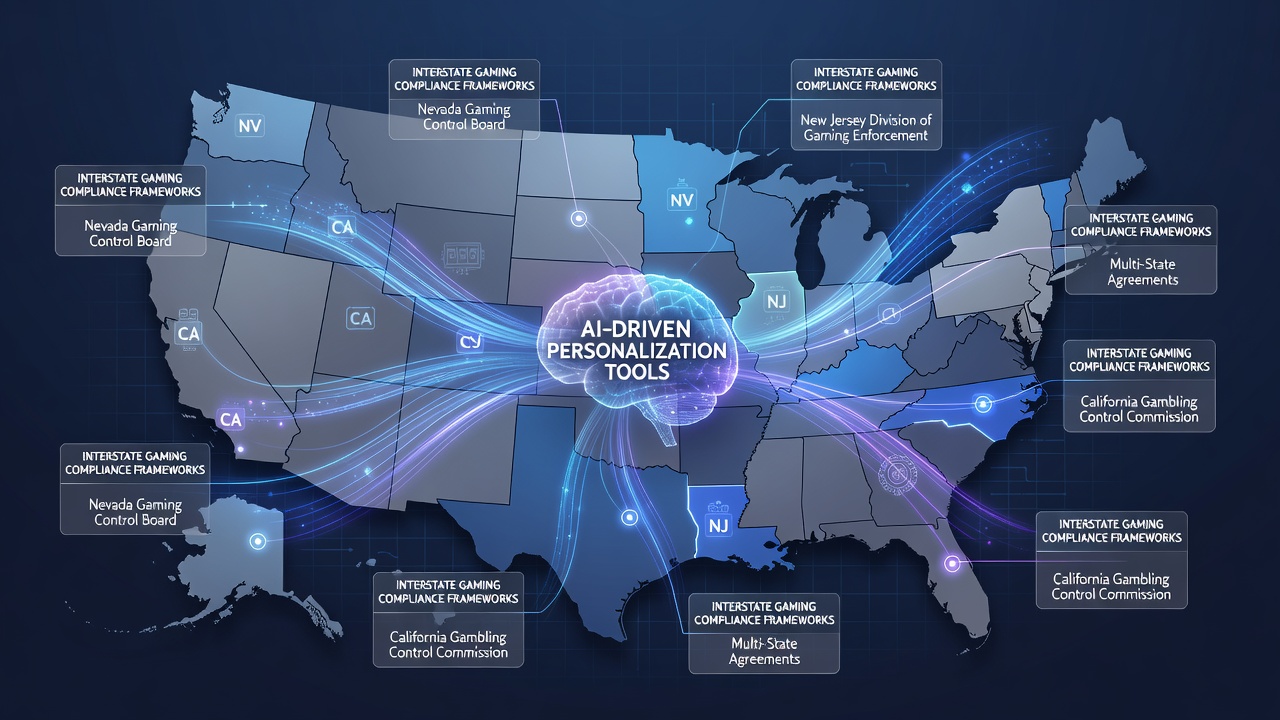
Tracing the Spread of AI-Driven Personalization Tools Through Interstate US Gaming Compliance Frameworks
AI-driven personalization tools have moved from experimental pilots into operational layers of licensed gaming platforms, and observers trace this movement through the layered compliance requirements that connect one state regulatory system to another. Data from multi-state operators shows that recommendation engines now adjust game suggestions, bonus structures, and session prompts based on individual play histories while remaining inside the boundaries set by each jurisdiction's data-handling rules.
States that opened iGaming markets earliest supplied the initial test beds. New Jersey's Division of Gaming Enforcement required operators to log every algorithmic change that affects player offers, and Pennsylvania's gaming control board added similar audit trails for dynamic content delivery. Those early mandates created templates that later states adopted when they legalized online play, which produced a pattern where personalization code travels alongside standardized compliance documentation.
Interstate Compacts and Data-Sharing Protocols
Compacts between states allow operators to share certain player data for responsible-gaming checks, yet each compact includes clauses that restrict how AI models can use that data for commercial personalization. The result is a patchwork in which an operator licensed in three states must maintain separate model versions or apply state-specific filters before any recommendation reaches a player device.
October 2026 figures released by the American Gaming Association indicated that thirty-one states now host some form of legal digital gaming, and twenty-two of those states have issued guidance on algorithmic transparency. Regulators in Michigan and West Virginia, for instance, require operators to submit model documentation that lists training data sources and fairness constraints before any new personalization feature goes live.
Geolocation and Real-Time Compliance Checks
Geolocation systems already verify player location at login, and several vendors now embed additional compliance checks inside the same API calls that feed personalization engines. When a player crosses a state line, the system switches to the destination state's rule set within milliseconds, which means the AI model must either pre-load multiple constraint sets or pause and reload parameters on the fly.
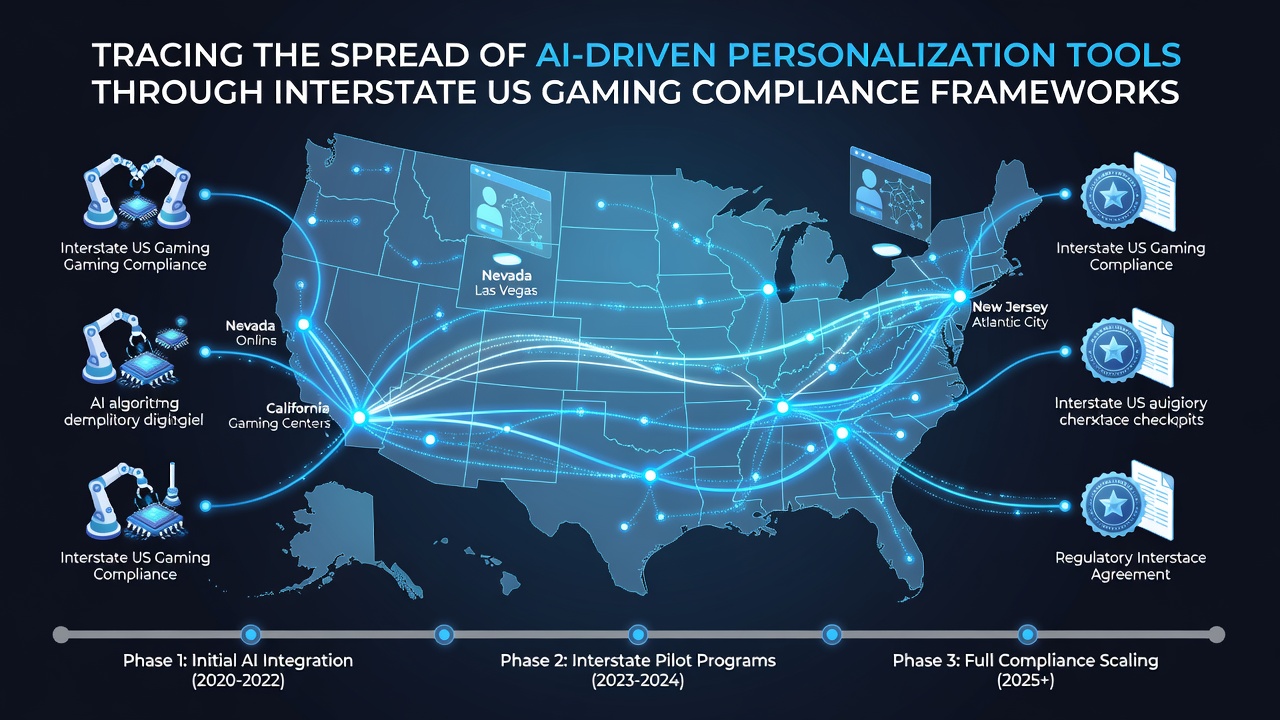
Operators report that these switches occur thousands of times per day along major commuter corridors, and the engineering teams maintain version-controlled rule libraries that correspond to each state's current code. One documented case involved an operator that updated its personalization model in Nevada, then needed seventeen days of re-certification before the same model could run in New Jersey because the two states apply different limits on session-length nudges.
Responsible Gaming Filters and Model Constraints
Every state gaming commission requires that personalization tools cannot promote play to individuals on voluntary exclusion lists or to accounts flagged for at-risk behavior. AI teams therefore train separate guardrail models that sit between the recommendation engine and the user interface. These guardrails draw on transaction data that compacts already require operators to share for cross-state exclusion enforcement.
Research published by the University of Nevada, Reno examined six operators across four states and found that personalization models reduced average session length by 7 percent when responsible-gaming filters were active, while maintaining revenue per active account at prior levels. The study also noted that states with explicit audit requirements for filter logic experienced fewer compliance incidents than states that relied on operator self-certification.
Payment and Loyalty Integration Points
Personalization extends to deposit offers and loyalty tier progressions. Because payment processors must register in each state where they handle gaming funds, the same compliance chain that governs fund movement now influences which AI-generated offers an operator can display. An operator cannot present a state-specific bonus to a player whose payment method has not cleared that state's financial-services review.
Industry associations such as the National Council of Legislators from Gaming States have circulated model language that would standardize disclosure requirements for AI-generated offers, yet adoption remains uneven. States that have passed the model language report faster approval times for new personalization features, while states still developing their own rules create longer lead times for operators.
Conclusion
AI-driven personalization continues to expand through the same compliance frameworks that already manage geolocation, responsible gaming, and financial reporting across state lines. The pace of rollout depends on how quickly each new jurisdiction incorporates algorithmic review into its licensing process, and operators maintain parallel documentation sets to satisfy differing state standards. Data from late 2026 shows steady integration rather than rapid convergence, with each additional state adding its own constraint layer to the models already running in neighboring markets.